The people behind 25 years of Made-in-India engineering
A second-generation family business: the founder who refused to accept that embedded systems had to be imported, the co-founder who built the organization around that conviction, and the next generation bringing cloud and AI home from the US.
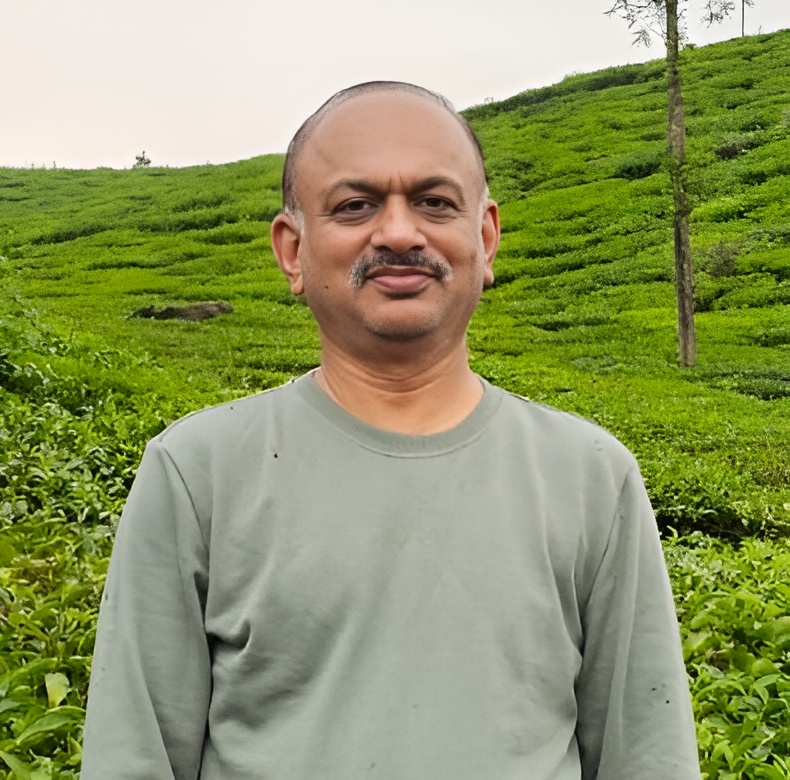
Attignal Nagaraj Venkatesh
LinkedInThe engineer who decided India should build its own embedded systems.
Venkatesh's business instincts showed long before his engineering degree. In the early 1980s in Mysore, as a student, he sold watches, repaired clocks and fixed radios. While studying in Chikkamagaluru he ran his first real trade: watches bought in Mysore sold at a premium in Chikkamagaluru, and coffee, cheap in Chikkamagaluru, carried back and sold in Mysore. Two towns, one bus route, margin in both directions.
The engineer caught up with the trader. He earned an Electronics & Communication degree from Adichunchanagiri Institute of Technology, Chikkamagaluru, and started out the way most careers start: as a sales executive, at PAM Networks Limited. But one question kept bothering him. Every electronic system around him was imported from China, Taiwan or further afield. Why couldn't India design and manufacture its own?
In 1994 he did something about it. There was no incorporation paperwork, no investors, not even an office worth the name. He simply opened a bank account at Sree Subramanyeswara Co-operative Bank in the name of MEI (Mysore Electronics Industry) Marketing and Services, and a company was born. He was its salesman, its marketer, its production line and its engineering department, all in one person.
The products came quickly. In 1995 he designed and built a complete interest-rate display board with an acrylic face and supplied it to State Bank of India's J.C. Road branch in Bengaluru. The same year he was hand-building electronic token displays, and he already had paying clients. The two product lines that still define the company, banking displays and token systems, both trace back to that one-man workshop.
On 26 January 2001 he formalised the venture, registering Digitech as a proprietorship in Bengaluru. It was Make in India, two decades before the slogan. The token display he had been building since the mid-1990s became the founding product. Then came the idea that would define an industry: Venkatesh integrated a token dispenser with the token display, and the electronic Queue Management System was born. Digitech was among the first in India to build a QMS this way. When State Bank of India introduced single-window banking, Digitech was the company chosen to roll out its queue management in 2003 and 2004, and the purchase orders are still on record. What is now a standard fixture in every bank, hospital and government office in India started, in large part, on his workbench.
The conviction was never just to substitute imports, but to beat them. Digitech's systems were engineered to compete with international brands, and in several product lines to lead them, at Indian price points and with same-city service.
The same long-view thinking shapes the company today. Venkatesh set out to make the Banashankari office energy independent, generating its own electricity so the company never depends on anyone for its energy needs. That self-generated power now charges a vehicle fleet steadily upgraded to electric. Sustainability, like manufacturing, done in-house.
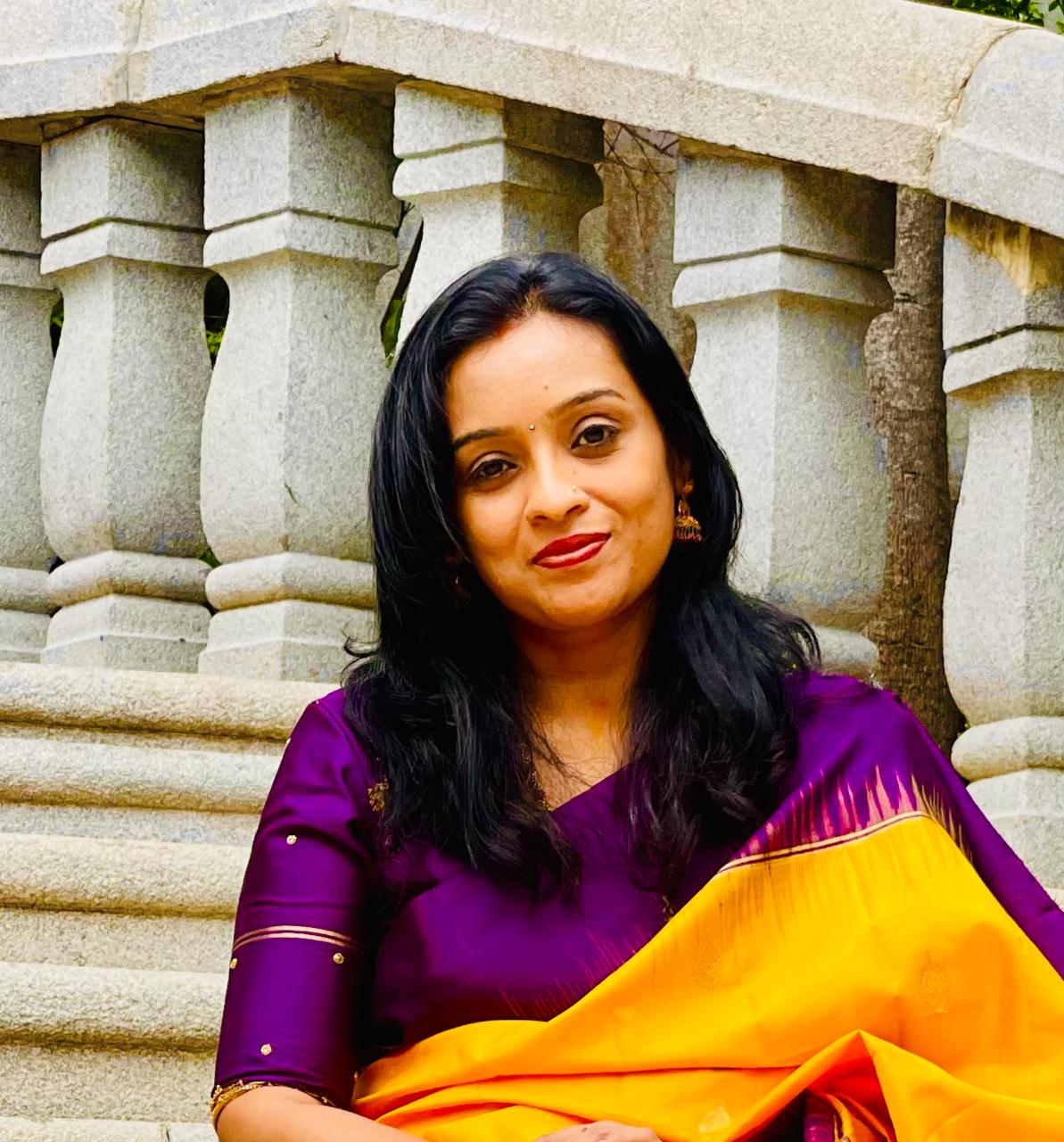
Shalini Hornebail Shamabhat
LinkedInThe organization builder, from the first day of the proprietorship to the boardroom.
A BCA graduate from Mangalore University, Shalini began her career as a teacher, educating school students in Mudigere, Karnataka, before moving to Bengaluru. That grounding in patient, structured teaching became the backbone of how she later built teams.
She has been part of the business from the very beginning, since Digitech was founded as a proprietorship in 2001, through its 2017 restructuring as Digi-Tech Solutions and its 2026 incorporation as Infra DigiTech Pvt Ltd.
In the company's formative years she built what a young manufacturer needs most and finds hardest: reach and structure. She established Digitech's channel-partner network across India, structured the organization as it grew, and took ownership of recruiting and employee relationships. That is the reason a 25-year-old company retains engineers for decades.
She also led the company through its certification journeys: the quality and compliance registrations that today anchor Infra DigiTech's ISO 9001:2015, GeM, MSME and export credentials.
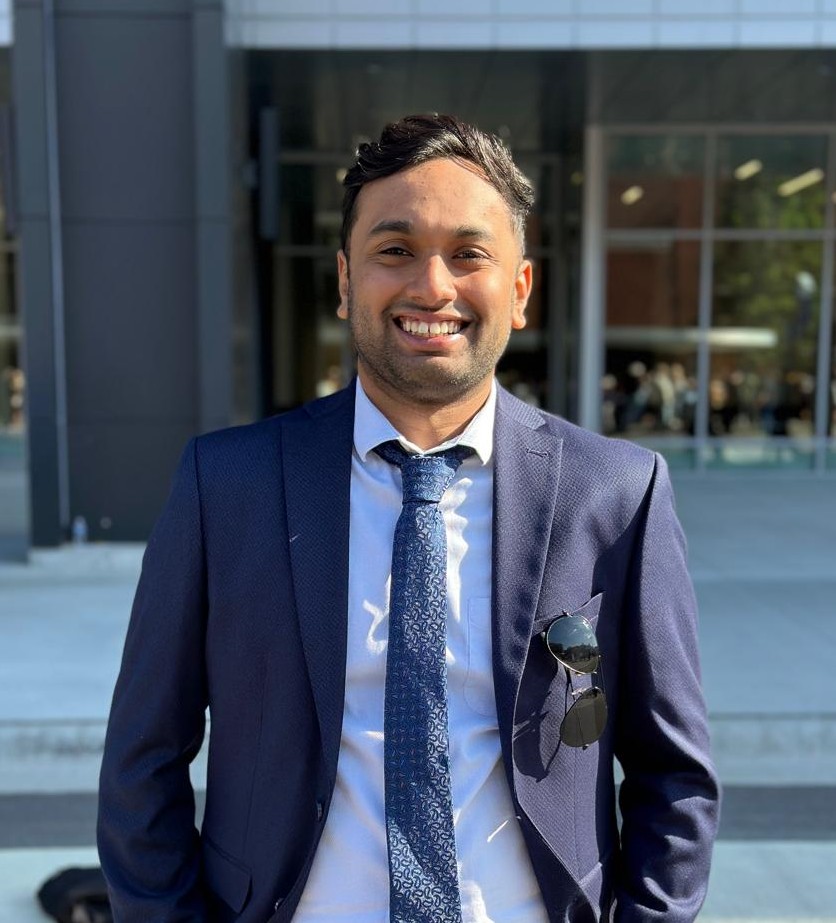
Aniruddh Venkatesh Attignal
LinkedInSecond-generation leadership bringing cloud, AI and global engineering practice home.
Aniruddh represents the second generation of this family business, the son of the founders, with a career built deliberately across the hardware-software boundary the company lives on.
The pull toward the family business came early. In 2022, during the final year of his engineering degree, he interned at what was then Digi-Tech Solutions and built his first product: Centralized Smart Interest Rate Displays for Banks, a mobile app that lets a bank's head office, located anywhere, update interest rates and push them instantly to the LED displays in every branch. That student project became a company product, and it still anchors the centralized rate-display line sold to banks today.
An Electronics & Communication engineer from BNM Institute of Technology, Bengaluru, he moved into software as a full-time developer at the Bengaluru office of Empower, the second-largest 401(k) retirement plan provider in the United States, before heading to the University of Wisconsin-Milwaukee in 2023 for a Master's in Computer Science.
During his Master's he interned with Rockwell Automation's R&D team at the company's global headquarters in Milwaukee, Wisconsin (home of the landmark Allen-Bradley clock tower), working on data models for automation devices such as Power Monitors and PowerFlex drives, and using Rockwell's edge-to-cloud applications to move data from EtherNet/IP network devices to cloud platforms like Azure IoT Hub. Industrial IoT at the source.
After graduating he joined PS Seasoning, Wisconsin, as a senior software developer, leading the company's cloud, AI and API development. He single-handedly implemented its applications and integrations across MuleSoft API integration, ERP-CRM integration, Azure cloud, Salesforce and React, and drove AI adoption for efficiency and growth.
He now leads technology and operations at Infra DigiTech, pointing that experience at the family mission: AI-enabled, cloud-connected, Made-in-India products engineered to compete with anyone.
Work with this team
Whether you are a hospital, a bank, a factory or an OEM partner, the directors are one call away from your project.